Success in a competitive teaching examination does not depend only on how many books you read. It also depends on how effectively you apply your knowledge under time pressure. A well-designed Mock Test creates an exam-like environment in which you must read carefully, choose the best answer, manage time and make decisions without outside help. This is why a regular Online Free Test can become one of the most useful parts of preparation for BPSC TRE, Bihar STET, CTET and other teacher recruitment or teacher eligibility examinations.
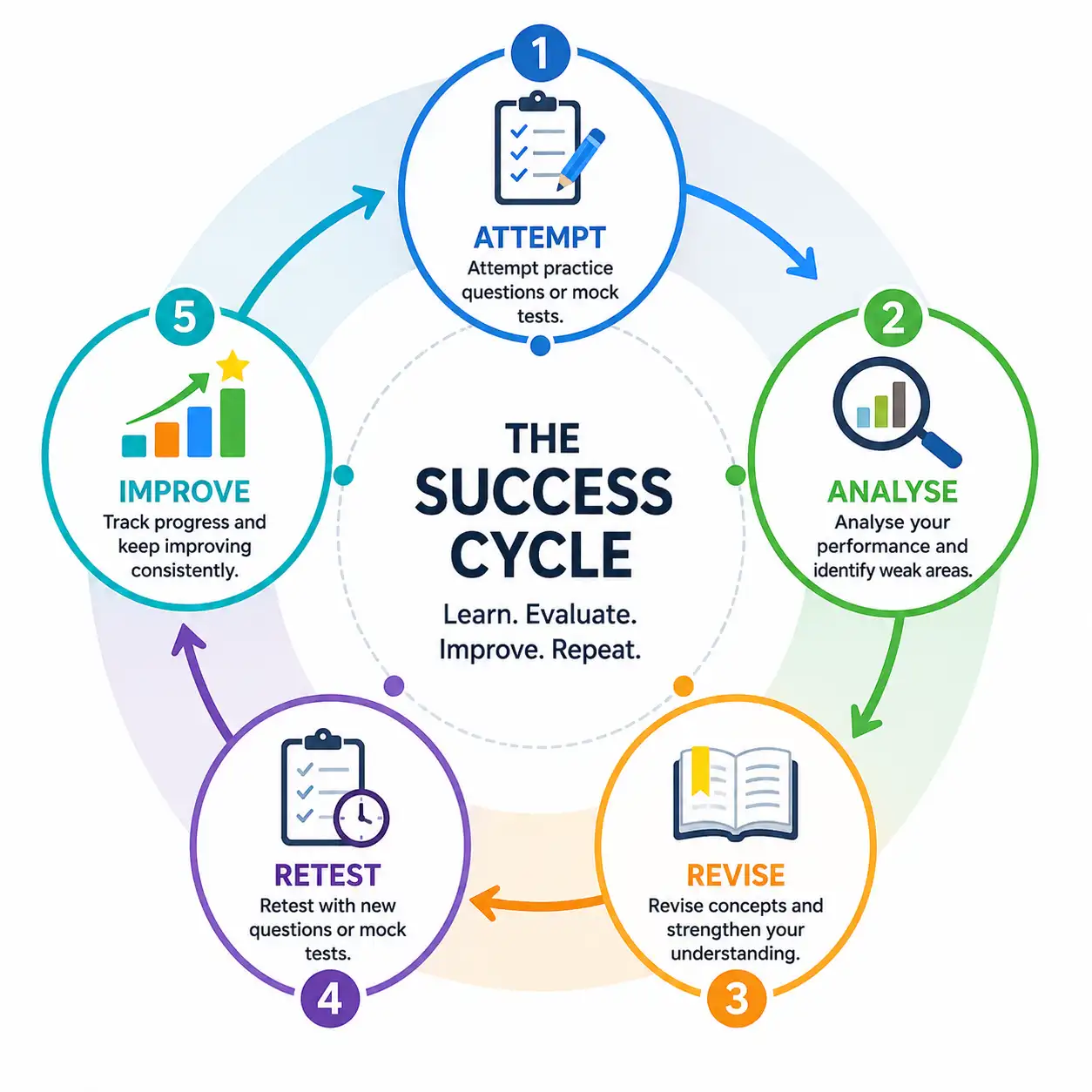
This complete guide explains how to use an English Mock Test, a BPSC Previous Year Mock Test, a subject-wise TRE Test, a STET Mock Test and a CTET Mock Test in a planned way. It is written for candidates who want more than random question practice. The goal is to help you build a repeatable system: learn a topic, attempt a test, study every mistake, revise weak areas and attempt the next test with a better strategy.
Whether you are beginning your preparation, revising the entire syllabus or entering the final stage before the examination, online tests can show you exactly where you stand. They can reveal forgotten concepts, confusing question types, weak chapters, poor time distribution and avoidable errors. When used honestly and consistently, mock tests convert preparation from guesswork into measurable progress.
Why a Mock Test Is Essential for Teacher Exam Preparation
Studying and testing are two different activities. During study, you can pause, reread a paragraph, check a solution or return to a difficult concept. During an examination, every question competes for limited time. A Mock Test bridges this gap by asking you to retrieve information and apply concepts in a controlled testing environment.
Mock tests also produce evidence. After reading a chapter, you may feel that you understand it completely. A test can verify whether that feeling is accurate. If you repeatedly confuse similar concepts or take too long to answer familiar questions, the result tells you what needs to change. This feedback is especially valuable in teaching examinations because the syllabus may include subject knowledge, language, pedagogy, child development, general studies and examination-specific sections.
A good test programme supports preparation in five major ways:
- Recall: It trains you to retrieve facts and concepts without looking at notes.
- Application: It shows whether you can use knowledge in unfamiliar or classroom-based situations.
- Speed: It helps you decide how much time to spend on different question types.
- Accuracy: It exposes careless reading, calculation errors and confusion between close options.
- Confidence: It makes the format and pressure of an objective examination feel familiar.
The best candidates do not merely attempt a large number of tests. They analyse every test. A score is only the beginning. The real learning occurs when you understand why an answer was correct, why your selected option was wrong and what rule or concept will prevent the same mistake in the next test.
What Is an Online Free Test?
An Online Free Test is a digital practice test that candidates can attempt without paying a test fee. It may be a short topic quiz, a subject-wise test, a previous year paper converted into an interactive format or a full-length examination simulation. A useful free test should provide clearly written questions, properly arranged options, a timer where appropriate, a submit function and a result that explains at least the correct answer.
Free tests are especially helpful at the beginning of preparation. Before purchasing a full course or test series, a candidate can use them to understand the quality of questions, the test interface and the result-analysis system. They also make daily practice accessible to students who are preparing with limited resources.
However, the word “free” should not mean “unstructured.” A random collection of questions may keep you busy without improving your exam readiness. Select an Online Free Test that matches your target examination, subject level and current stage of preparation. If your target is BPSC TRE, use BPSC-oriented tests. If your target is CTET, include pedagogy and teaching-learning situations relevant to the applicable paper. If you are preparing for STET, choose subject-level practice aligned with the latest official syllabus.
Features to Look for in a Free Online Mock Test
- A clear test title and subject or exam label
- Questions relevant to the stated syllabus
- Readable options on desktop and mobile devices
- A visible timer for timed tests
- Simple navigation between questions
- A confirmation step before final submission
- Instant score or result summary
- Correct answers and useful explanations where available
- A review page showing attempted, unattempted and incorrect questions
- Progress history for registered users
English Mock Test: Improve Language Accuracy and Exam Performance
An English Mock Test can serve two purposes. First, it can test English as a subject through grammar, vocabulary, comprehension and language usage. Second, an English-language test can help candidates who prefer to practise examination questions in English. In both cases, the candidate must learn to read precisely. Many objective questions are not difficult because the concept is advanced; they are difficult because a small word changes the meaning.
A balanced English practice test may include reading comprehension, error detection, sentence improvement, fill-in-the-blanks, synonyms, antonyms, one-word substitution, idioms, spelling, active and passive voice, direct and indirect speech, parts of speech, tense, subject–verb agreement, articles, prepositions, conjunctions and basic language pedagogy where relevant.
For teacher examinations, English preparation should not remain limited to memorising rules. Candidates may also need to understand how children acquire language, how a teacher supports multilingual learners, why formative feedback matters and how reading or writing skills can be developed in the classroom. The exact syllabus varies, so every candidate should compare the practice test with the latest official notification for the examination being attempted.
How to Attempt an English Mock Test
- Read the instruction first. Determine whether the question asks for the correct option, the incorrect option, the best replacement or the most appropriate classroom response.
- Identify the tested rule. Before looking at the options, decide whether the question concerns tense, agreement, vocabulary, comprehension or pedagogy.
- Use the sentence context. A grammatically possible word may still be unsuitable for the meaning of the sentence.
- Eliminate clearly wrong options. Reducing four options to two improves the quality of your final decision.
- Avoid overthinking simple questions. If the rule and context are clear, select the answer and continue.
- Review every language error. Record the correct rule and one new example in your error notebook.
English Topics That Deserve Regular Practice
| Area | What to Practise | Common Difficulty |
|---|---|---|
| Grammar | Tense, agreement, articles, prepositions and sentence structure | Applying rules to long or complex sentences |
| Vocabulary | Meaning, usage, synonyms, antonyms and context clues | Choosing between closely related words |
| Reading Comprehension | Main idea, inference, tone, factual detail and vocabulary in context | Answering from assumptions instead of the passage |
| Language Usage | Error detection, sentence improvement and rearrangement | Missing small structural errors |
| Language Pedagogy | Acquisition, classroom methods, assessment and learner errors | Selecting the most learner-centred option |
One long test every week is useful, but small daily practice often produces faster improvement in English. Attempt a ten- or twenty-question quiz after completing a grammar topic. At the end of the week, take a mixed English Mock Test without notes. This combination of topic tests and mixed revision reduces the chance of forgetting earlier rules.
BPSC Previous Year Mock Test: Learn from the Questions Already Asked
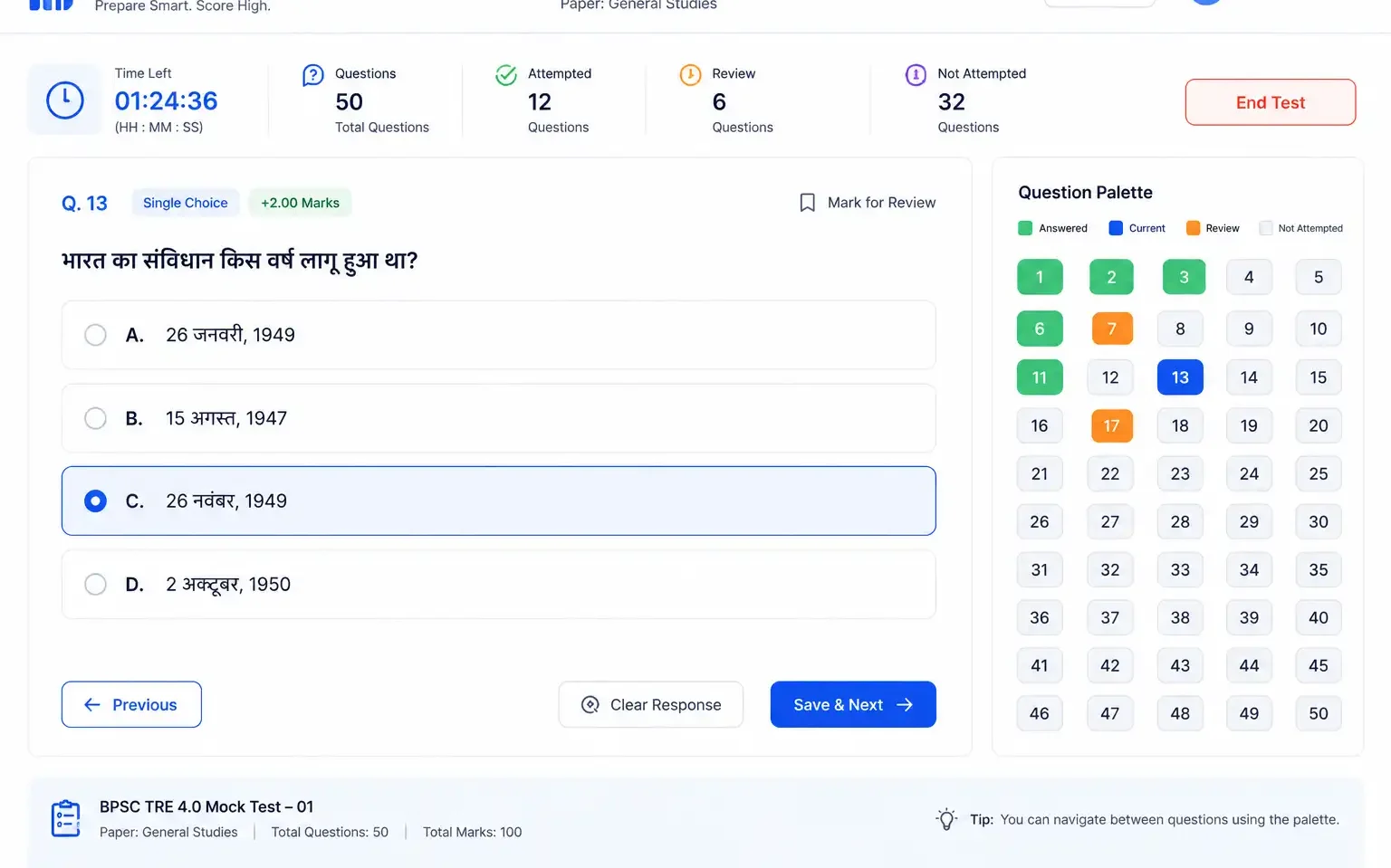
A BPSC Previous Year Mock Test converts an earlier BPSC examination paper into an online practice format. Instead of passively reading a PDF and checking the answer immediately, you attempt the questions as a timed test. This allows the previous year paper to measure your knowledge, decision-making and time management more realistically.
Previous year papers are valuable because they reveal how an examination authority frames questions. They can show the depth of factual knowledge expected, the balance between direct and conceptual questions, the language used in options and the kinds of topics that have appeared before. They do not guarantee that the same questions will return, but they help candidates understand the style and level of the examination.
A proper BPSC Previous Year Mock Test should preserve the original meaning of the questions. If a paper is bilingual, the transcription should be checked carefully so that translation errors do not change the answer. The answer key should be validated, and disputed questions should be clearly marked rather than presented with false certainty.
Why BPSC Previous Year Questions Matter
- They introduce you to the wording and structure used in earlier examinations.
- They help you separate high-frequency themes from low-priority details.
- They provide a realistic benchmark after completing the syllabus.
- They reveal whether your books and notes cover the required depth.
- They help you practise time allocation using authentic question styles.
- They can expose recurring mistakes across multiple attempts.
How to Use a BPSC Previous Year Mock Test Correctly
Begin with one paper as a diagnostic test. Attempt it without preparation if you want to measure your starting point, or after a first syllabus reading if you want a more meaningful score. Do not pause the timer to check facts. Mark uncertain questions for review and complete the paper under realistic conditions.
After submission, divide your errors into four categories:
- Knowledge gap: You had not studied the fact or concept.
- Revision gap: You studied it earlier but could not recall it.
- Interpretation error: You knew the topic but misunderstood the question.
- Careless error: You selected the wrong option despite knowing the answer.
Each category requires a different solution. A knowledge gap requires study. A revision gap requires spaced revision. An interpretation error requires slower reading and question analysis. A careless error requires better test discipline. Merely looking at the correct answer does not solve the underlying problem.
Attempt the same previous year test again after a reasonable revision interval. The purpose is not to memorise the sequence of answers. The purpose is to confirm that you can now explain the concepts and avoid the mistakes identified during the first attempt.
BPSC TRE Test: Build Exam Readiness for Teacher Recruitment
The BPSC Teacher Recruitment Examination is commonly discussed by candidates as BPSC TRE. A focused TRE Test helps teacher aspirants practise the areas relevant to their target post, subject and notified syllabus. Because different recruitment phases, classes and subjects may have different requirements, candidates must verify the latest official BPSC notification before choosing a test series.
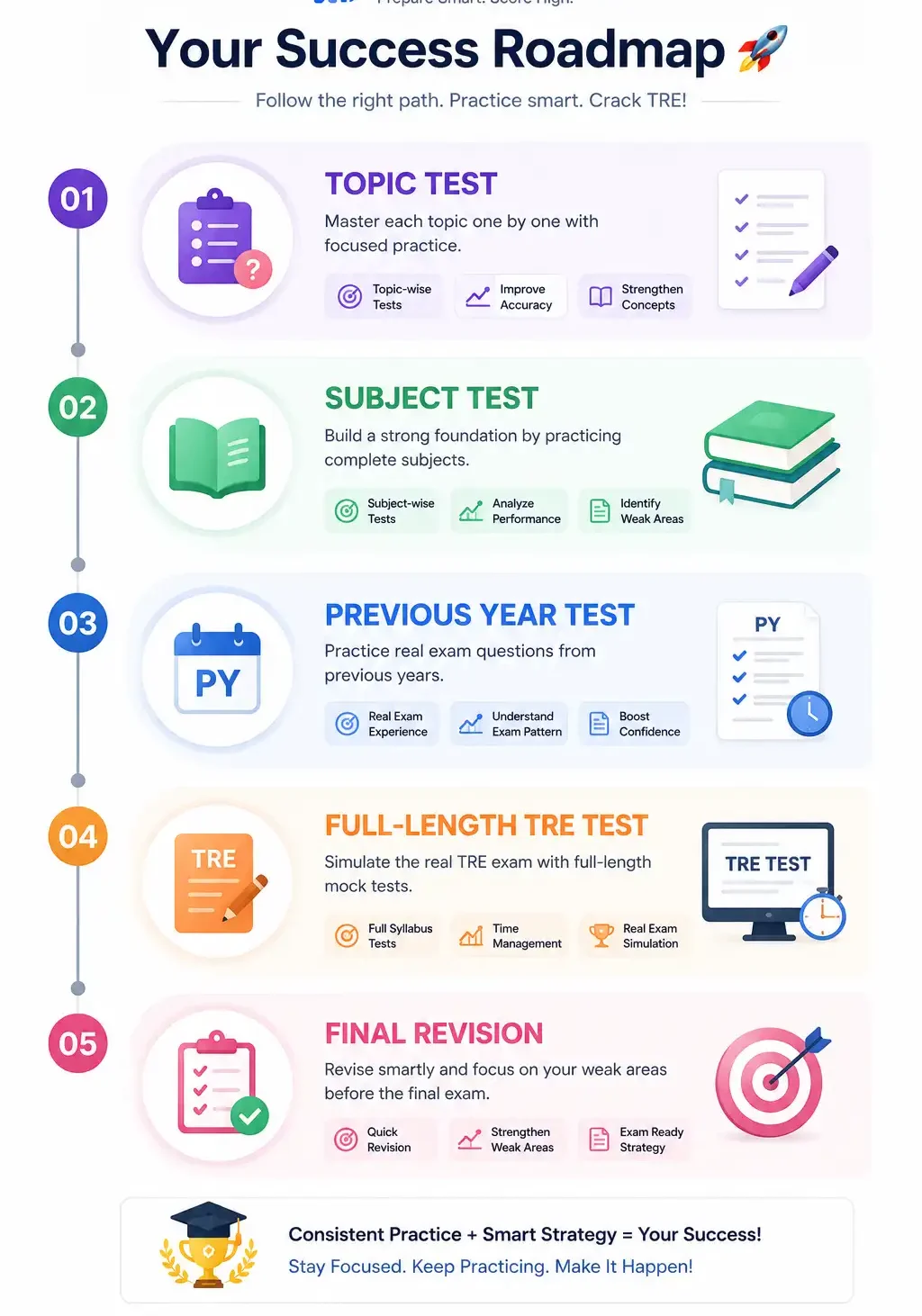
A strong BPSC TRE Mock Test programme usually includes multiple levels of practice. Topic-wise tests build foundations. Subject-wise tests strengthen coverage. Mixed tests train switching between topics. Previous year tests expose authentic question styles. Full-length tests develop stamina, strategy and examination confidence.
Types of TRE Tests You Should Attempt
- Topic-wise TRE Test: Focuses on one chapter or concept and is best used immediately after study.
- Subject-wise TRE Test: Covers a larger portion of one subject and checks retention across chapters.
- Language Practice Test: Tests grammar, comprehension and language requirements according to the notified syllabus.
- General Studies Test: Provides mixed practice in the general awareness or general studies areas specified for the examination.
- BPSC Previous Year Mock Test: Presents earlier questions in a timed interactive format.
- Full-Length TRE Test: Simulates the complete paper as closely as the current notification allows.
How a TRE Test Series Supports Different Stages of Preparation
Foundation stage: Use short, untimed topic tests. Focus on understanding why each answer is correct. Scores may be low in the beginning, and that is acceptable. Your first responsibility is to identify missing concepts.
Development stage: Begin timed subject tests and mixed revision quizzes. Compare accuracy across subjects. Increase the number of questions gradually rather than moving directly from small quizzes to continuous full-length papers.
Exam stage: Attempt full-length tests under realistic conditions. Use the same time of day when possible, remove distractions, follow the examination rules and analyse your performance on the same day.
Do Not Prepare for TRE by Score Alone
A high score in an easy test may create false confidence, while a moderate score in a difficult but relevant test may reveal useful strengths. Therefore, compare more than percentages. Track the quality of the test, question relevance, accuracy, unanswered questions, average time, chapter-wise performance and the number of repeated errors.
Your goal should be stable performance. If one test score is high and the next is very low, examine the reason. Was the second test from an unprepared subject? Did you spend too long on a difficult section? Were many answers changed during review? Consistency grows when you correct the process behind the score.
STET Mock Test: Subject Knowledge and Teaching Readiness
A State Teacher Eligibility Test evaluates candidates according to the syllabus and rules notified by the concerned state authority. For Bihar candidates, a STET Mock Test should be selected according to the applicable paper, subject and latest Bihar STET notification. Avoid assuming that an old test pattern will remain unchanged in every cycle.
A useful Bihar STET Online Test should challenge both knowledge and examination technique. Subject questions test depth and accuracy, while teaching-related questions may examine how knowledge is presented, assessed or applied. Candidates should therefore combine textbook study with objective practice instead of relying only on memorised question banks.
How to Prepare with a STET Mock Test
- Download or read the latest official syllabus and divide it into units.
- Mark each unit as strong, average or weak after an initial diagnostic test.
- Complete one weak unit and attempt a topic test immediately.
- Attempt a mixed test after every few units to protect earlier learning.
- Use subject-wise STET tests to identify missing subtopics.
- Move to full-length mock tests only after basic coverage is complete.
- Revisit every incorrect and guessed answer during weekly revision.
When reviewing a STET Mock Test, do not ignore answers that were correct by guessing. A guessed correct answer is not yet a reliable strength. Mark it separately and verify the concept. In the next revision cycle, attempt a similar question without looking at the earlier solution.
Subject-Specific STET Practice
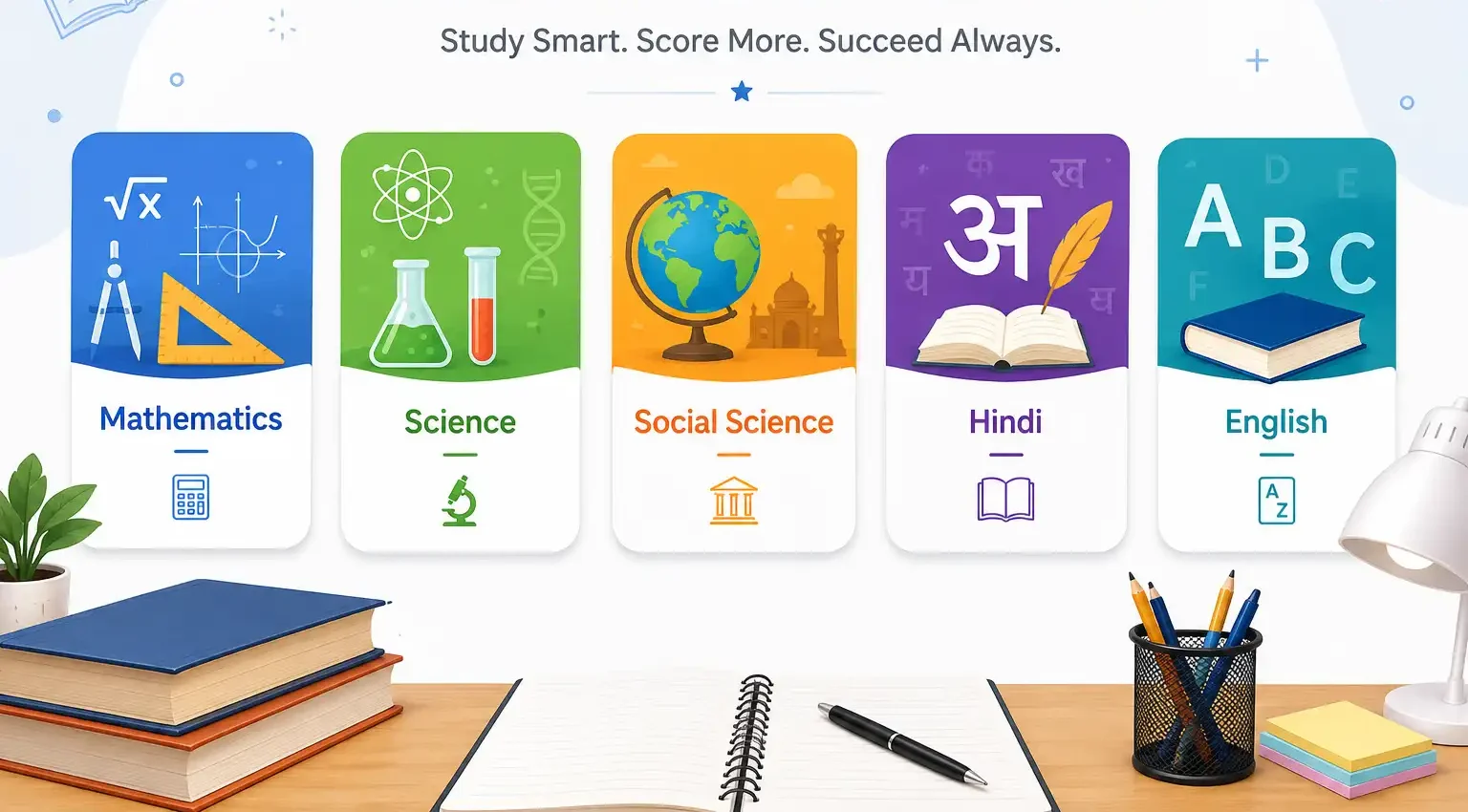
Subject preparation should reflect the nature of the discipline. Mathematics candidates need repeated problem-solving and error checking. Science candidates must combine concepts, factual understanding and application. Social science candidates should organise dates, places, processes and cause–effect relationships. Language candidates need grammar, comprehension, literature or pedagogy practice as required by the syllabus. The best online test series does not treat every subject as if it requires the same learning method.
CTET Mock Test: Practise Concepts, Pedagogy and Classroom Situations
CTET is a national-level teacher eligibility examination associated with teaching eligibility under its applicable rules. A CTET Mock Test should be chosen according to the paper for which you are eligible and preparing. Since official patterns, dates and instructions can be revised, candidates should always use the current information bulletin and syllabus as the final authority.
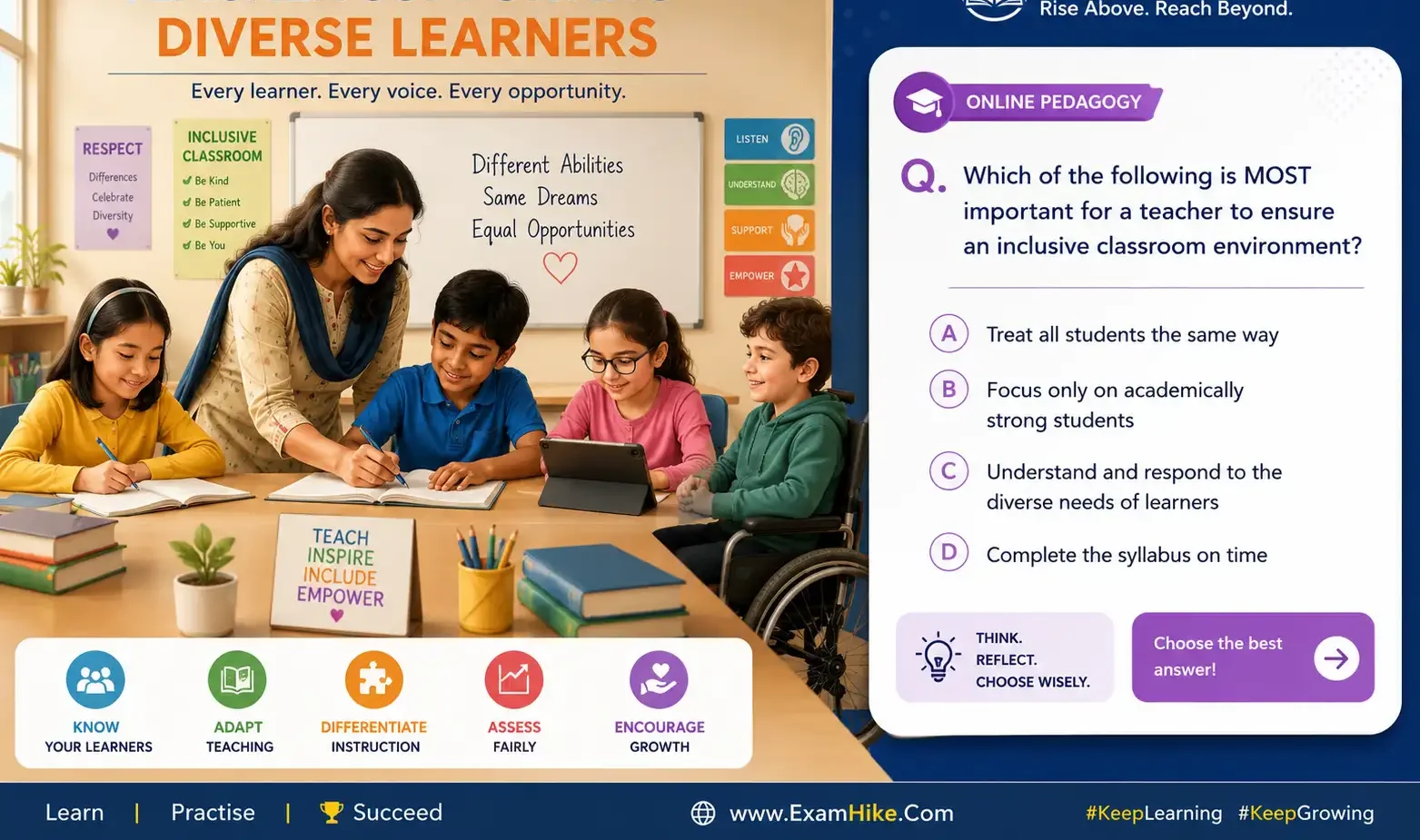
CTET preparation is not simply the memorisation of definitions. Many questions require candidates to select the most appropriate teaching approach, interpret a learner’s behaviour, recognise an inclusive classroom practice or apply subject pedagogy. Options may appear similar, so the candidate must understand the principle behind the question.
Important Areas for CTET Online Test Practice
- Child development and the relationship between learning and development
- Individual differences and inclusive education
- Assessment for learning and assessment of learning
- Language comprehension and language pedagogy
- Mathematics concepts and mathematics pedagogy
- Environmental studies concepts and classroom approaches where applicable
- Science or social science content and pedagogy according to the selected paper
- Classroom situations requiring learner-centred decisions
How to Read Pedagogy Questions in a CTET Mock Test
First identify the central educational principle. Is the question about inclusion, assessment, constructivist learning, language development, learner error or classroom interaction? Then remove options that shame learners, promote mechanical memorisation without understanding, ignore diversity or treat assessment only as punishment. Finally, compare the remaining options and select the one that most directly supports meaningful learning in the situation described.
This method should not be used as a shortcut without studying pedagogy. It works only when the candidate understands why one classroom practice is more appropriate than another. After every CTET Mock Test, write one sentence explaining the educational reasoning behind each incorrect pedagogy answer.
Paper-Wise CTET Practice
Candidates preparing to teach at different stages should select the paper that matches the applicable eligibility rules and career goal. The paper choice affects the subjects and level of practice required. Before joining any CTET Online Test Series, compare its section coverage with the latest official syllabus. A test labelled “CTET” is not automatically suitable for every candidate.
BPSC TRE, STET and CTET Mock Test Comparison
These examinations are connected with teaching careers, but they should not be treated as identical. The following comparison explains how to choose practice material without making assumptions about a specific recruitment cycle. Always verify the latest official syllabus, eligibility rules, marking scheme and examination instructions.
| Test Category | Main Preparation Purpose | Best Practice Material | Important Check Before Attempting |
|---|---|---|---|
| BPSC TRE Test | Preparation for the relevant Bihar teacher recruitment examination | Topic tests, subject tests, general studies or language tests as notified, previous year papers and full mocks | Recruitment phase, post, class level, subject and latest official pattern |
| STET Mock Test | Preparation for the relevant state teacher eligibility examination | Paper-wise and subject-wise tests, pedagogy practice and full-length mocks | State notification, selected paper, subject and syllabus |
| CTET Mock Test | Preparation for the Central Teacher Eligibility Test | Paper-wise content, child development, language, subject pedagogy and full mocks | Paper selection, eligibility, official information bulletin and syllabus |
| English Mock Test | Improving language knowledge, comprehension and exam reading accuracy | Grammar, vocabulary, comprehension, usage and language pedagogy tests | Whether English is a qualifying, language, subject or medium requirement |
| BPSC Previous Year Mock Test | Understanding earlier BPSC question style and measuring preparation | Verified previous year questions presented in a timed interface | Paper identity, transcription accuracy and validated answer key |
Topic Test, Subject Test or Full-Length Mock Test: Which One Should You Choose?
Each test format serves a different purpose. A topic test asks whether you understood one chapter. A subject test asks whether you can connect and recall several chapters. A full-length mock asks whether you can manage an entire paper under time pressure. Using only one type creates a gap in preparation.
Topic-Wise Tests
Attempt topic-wise tests immediately after completing a chapter. Keep the first attempt focused on learning rather than speed. Review each solution and return to the source material for any weak concept. Topic tests are ideal for grammar rules, a mathematics chapter, a science unit, a history period, a pedagogy concept or a section of child development.
Subject-Wise Tests
Subject-wise tests should begin after you have completed several related topics. They reveal whether earlier chapters remain available in memory and whether you can switch between question types. For example, a mixed English subject test may combine grammar, vocabulary and comprehension. A science test may move between physics, chemistry and biology concepts.
Full-Length Mock Tests
Full-length tests are most useful after meaningful syllabus coverage. Attempting too many full mocks before building foundations can produce repeated low scores without clear improvement. In the later stage, however, full-length tests become essential for stamina, section order, time management and decision-making.
Previous Year Mock Tests
Previous year tests should be used throughout preparation in different ways. An early paper can diagnose your starting level. A mid-stage paper can check whether study is aligned with the examination. A final-stage paper can act as a realistic simulation. Protect a few good papers for fresh attempts rather than reading every solution in advance.
How to Start an Online Mock Test the Right Way
Before pressing the “Start Test” button, decide the purpose of the attempt. Are you learning a topic, checking a subject or simulating the final examination? The purpose determines whether you should use a timer, whether you may review notes afterward and how strictly you should follow exam conditions.
Pre-Test Checklist
- Confirm that the test matches your exam, paper and subject.
- Check the number of questions and available time shown on the platform.
- Read the marking and submission instructions.
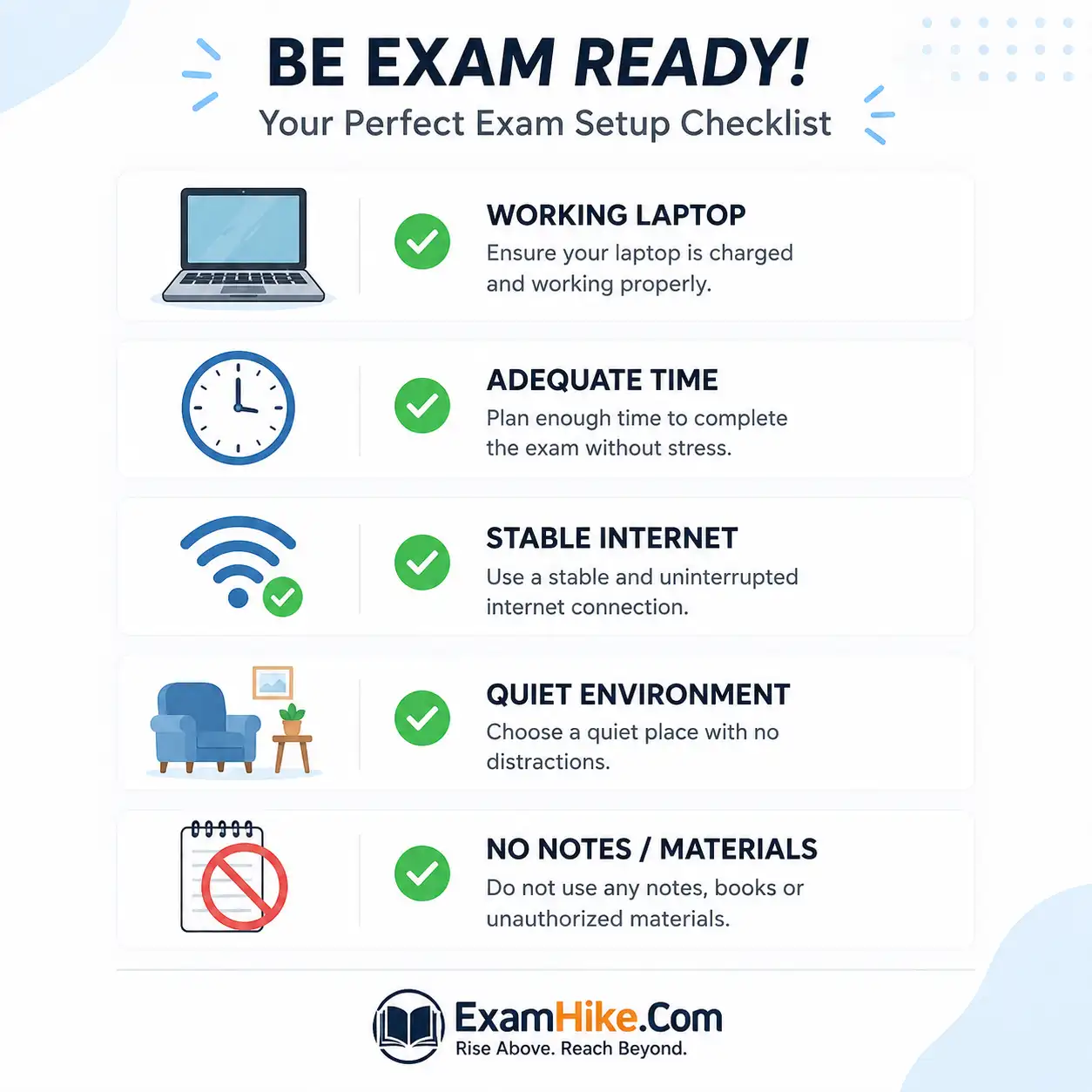
- Use a stable internet connection and a sufficiently charged device.
- Keep rough paper only if it is allowed or useful for the practice format.
- Turn off notifications and remove avoidable distractions.
- Do not open notes, search engines or messaging apps during a serious mock.
- Begin with a calm mind and a clear section strategy.
Honesty matters. An inflated score achieved by checking answers during a mock provides no protection in the real examination. A lower but honest score gives you useful information and a chance to improve.
Smart Time Management During a Mock Test
Time management is not the ability to answer every question at the same speed. It is the ability to protect time for questions you can solve while preventing one difficult question from damaging the entire paper. Your strategy should respect the rules and structure of the actual examination.
A practical approach is to make more than one pass through the paper. In the first pass, answer questions that are clear and manageable. Mark uncertain questions for review if the interface allows it. In the second pass, work on questions that need more thought. Use the final minutes to check unanswered items and review marked questions according to the examination’s marking rules.
Do not change an answer only because it “looks too easy.” Change it when you identify a definite rule, fact or reasoning error in your first choice. Frequent answer-changing without evidence can reduce accuracy.
When a Question Takes Too Long
If you are making no progress, move forward. The time already spent cannot be recovered, but further loss can be prevented. Mark the question and return later. A fresh look after completing easier questions may reveal the solution. This is particularly important in lengthy reading, calculation or statement-based questions.
Time Strategy Must Be Tested, Not Assumed
Some candidates prefer beginning with their strongest section to build confidence. Others prefer the section requiring the freshest concentration. There is no universal order. Use several full-length mock tests to compare strategies, then choose the one that produces stable accuracy and adequate completion.
How to Analyse Your Mock Test Result
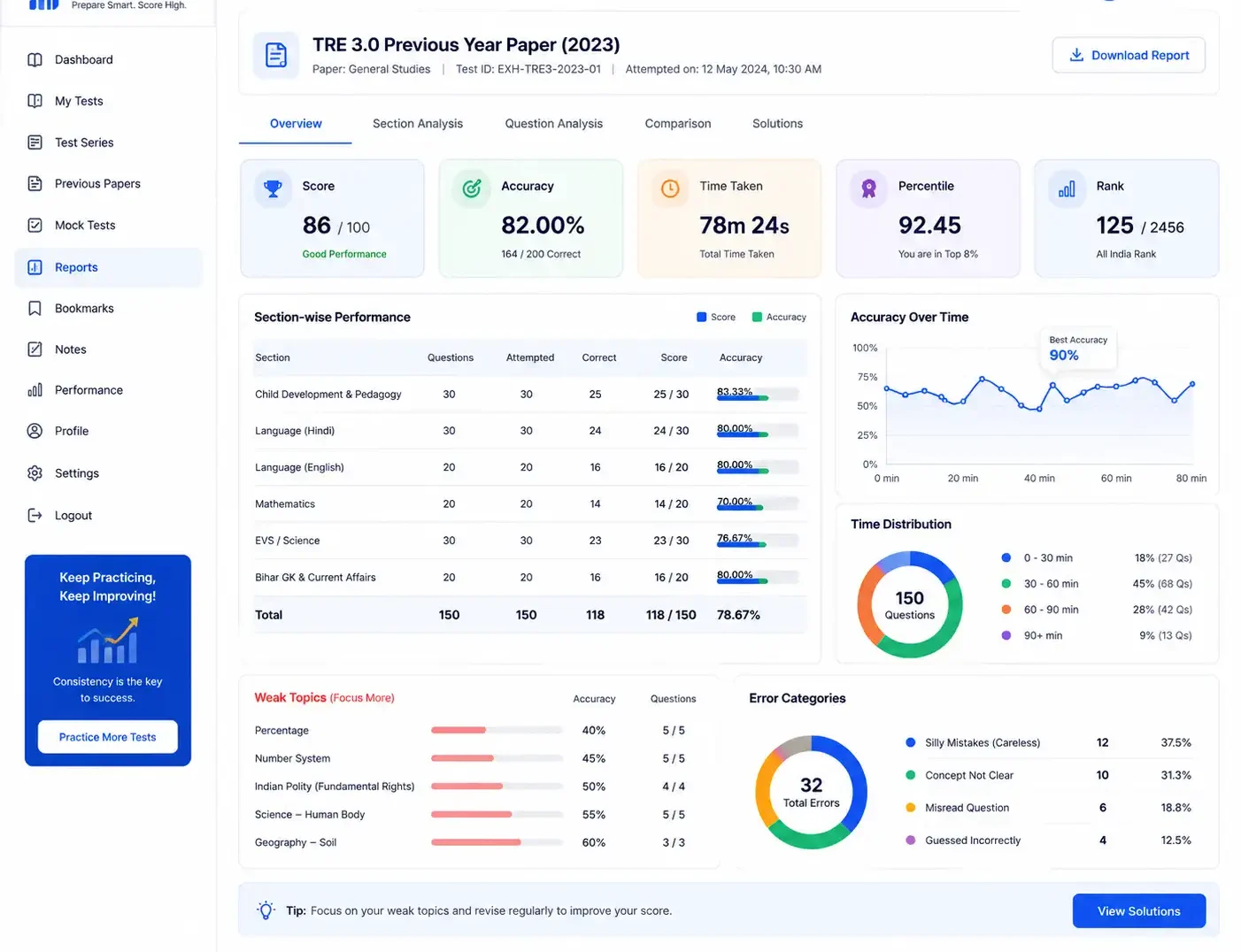
The result page is not the end of a test; it is the beginning of revision. A candidate who spends one hour attempting a test and five minutes reviewing it loses much of its value. Detailed analysis should examine score, accuracy, time, topic performance and the reason behind each error.
Step 1: Review Incorrect Answers
For every incorrect answer, read the question again before viewing the explanation. Try to solve it without pressure. If you still cannot answer, study the solution and identify the exact missing concept. Write the concept in a short error log rather than copying the entire solution.
Step 2: Review Guessed Answers
Correct guesses can hide weaknesses. Label them as “uncertain correct” and verify the rule or fact. If you guessed between two options, understand why the rejected option was wrong. This turns luck into knowledge.
Step 3: Review Unattempted Questions
An unanswered question may indicate lack of knowledge, shortage of time or fear of negative marking. Record the cause. The corrective action depends on it. If you knew the answer but never reached the question, improve time allocation. If you could not eliminate any option, revise the topic.
Step 4: Study Time Distribution
Look for sections where time spent was high but marks gained were low. This may indicate weak fundamentals or an inefficient approach. Also note questions answered very quickly but incorrectly; these often reveal careless reading.
Step 5: Create an Error Notebook
An error notebook should be brief and reusable. Include the topic, the type of error, the correct principle and the date for revision. Avoid copying hundreds of full questions. The notebook should help you see patterns: perhaps most errors come from words such as “not,” from confusing two educational thinkers, from formula selection or from historical chronology.
| Error Type | What It Means | Corrective Action |
|---|---|---|
| Concept Error | The basic idea is unclear | Restudy the concept and solve a small topic test |
| Memory Error | The fact was studied but forgotten | Add it to spaced revision and active recall |
| Reading Error | A keyword or condition was missed | Underline mental keywords and slow down on negatives |
| Calculation Error | The method was known but arithmetic failed | Write steps clearly and check units or signs |
| Time Error | Too much time was spent on low-return questions | Use a question time limit and a second-pass strategy |
| Guessing Error | An answer was selected without adequate elimination | Follow the current marking rules and improve elimination |
Build a Personal Mock Test Performance Tracker
A performance tracker turns individual scores into a trend. Record the date, test name, exam category, score, accuracy, questions left, weak topics and the next action. After several tests, patterns become visible. You may discover that your accuracy is improving while speed remains slow, or that one subject repeatedly reduces the overall score.
Do not compare scores from unrelated tests as if they have equal difficulty. Use the tracker mainly to compare similar tests and to observe personal improvement. A full-length CTET test and a short English grammar quiz measure different things.
| Date | Test Name | Score/Accuracy | Main Weakness | Next Action |
|---|---|---|---|---|
| Day 1 | Diagnostic Online Free Test | Record result | Identify lowest-performing unit | Revise that unit |
| Day 5 | Topic Mock Test | Record result | Note concept and reading errors | Practise similar questions |
| Day 10 | Subject-Wise Test | Record result | Compare chapters | Revise weak chapters |
| Day 15 | Previous Year Mock Test | Record result | Check exam-style weaknesses | Update strategy |
| Day 20+ | Full-Length Mock Test | Record result | Review time and accuracy | Plan next revision cycle |
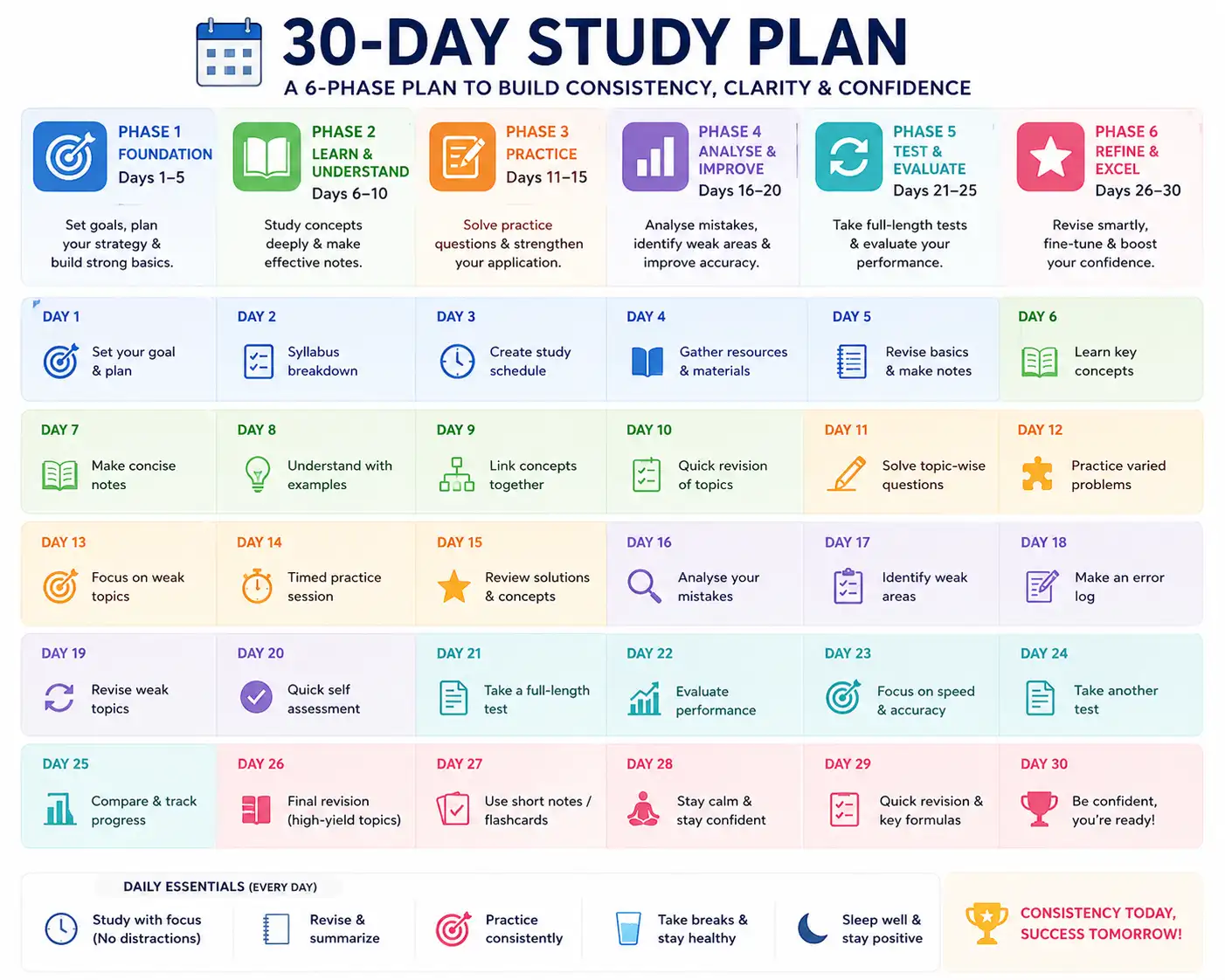
A 30-Day Mock Test Preparation Plan
The following plan can be adapted for BPSC TRE, STET, CTET or a mixed teacher examination schedule. It does not replace the official syllabus. Change the subjects, number of tests and study hours according to your target examination and available time.
Days 1–5: Diagnose and Organise
Read the latest official syllabus and divide it into units. Attempt one diagnostic Online Free Test without checking notes. Analyse the result and classify each unit as strong, average or weak. Create a realistic timetable that gives more time to weak and high-value units without abandoning strong areas.
During these five days, begin an error notebook and a performance tracker. Complete short topic tests after each study block. Keep the focus on conceptual accuracy rather than test volume.
Days 6–10: Strengthen Core Topics
Study the most important weak units and use topic-wise tests for immediate feedback. Include daily language or English practice if it is relevant to your examination. Revise yesterday’s mistakes before starting new content. At the end of Day 10, attempt a subject-wise test to check whether the individual topics can be recalled together.
Days 11–15: Add Previous Year Practice
Attempt a BPSC Previous Year Mock Test if BPSC TRE is your target, or the appropriate previous year test for STET or CTET. Use realistic timing. Compare the paper with your study material and identify topics that need deeper coverage. Continue short quizzes for weak chapters.
Days 16–20: Practise Mixed Tests
Move from isolated topics to mixed practice. Alternate between subject-wise tests and exam-oriented mixed tests. Train yourself to switch from one kind of question to another. Review time spent per section and experiment with section order where the test format permits it.
Days 21–25: Full-Length Simulation
Attempt full-length tests on alternate days, leaving enough time for complete analysis and revision. Do not attempt a new full test until the most important errors from the previous one have been addressed. On non-test days, revise the error notebook, formulas, dates, rules, concepts and pedagogy principles that repeatedly cause difficulty.
Days 26–28: Repair High-Impact Weaknesses
Use your tracker to choose the weaknesses that cost the most marks. Attempt short targeted tests rather than randomly revising everything. If time management is the issue, practise timed sections. If accuracy is the issue, slow down and explain each answer. If retention is the issue, use active recall and spaced repetition.
Days 29–30: Final Review and Calm Practice
Attempt one final carefully selected mock test if it fits your exam schedule. Review errors without panic. Avoid trying to learn an unrealistic quantity of new material. Confirm examination instructions from official sources, organise required documents and protect sleep and concentration.
Daily Study Routine with Online Tests
A daily routine should balance learning, recall and testing. One possible structure is a concept session, a short break, a practice session, an error review and a brief revision of older material. Candidates with limited time can reduce the duration of each block while preserving the sequence.
- Concept Block: Study one defined topic from a reliable source.
- Recall Block: Close the book and write or speak the main points.
- Practice Block: Attempt a short topic test or English mock quiz.
- Analysis Block: Review incorrect, guessed and unanswered questions.
- Revision Block: Revisit older mistakes using the error notebook.
Long hours are not automatically productive. A focused two-hour routine with active testing can be more valuable than many hours of passive reading. Track completed tasks instead of only counting study time.
Subject-Wise Strategy for Teacher Exam Mock Tests
Language and English
Combine rule-based practice with reading. Attempt short grammar quizzes, vocabulary-in-context questions and comprehension passages. For every error, write the rule and a fresh example. In language pedagogy, connect theory with classroom situations.
Mathematics
Do not read solutions as a substitute for solving. Write steps, check units and note whether an error came from the formula, calculation or interpretation. Use timed sets only after the method is understood. Reattempt incorrect problems without viewing the solution.
Science
Connect facts with concepts and everyday applications. Create small diagrams, comparison tables and cause–effect notes. During mock analysis, distinguish a factual gap from a conceptual gap. Similar-looking scientific terms should be revised together.
Social Science and General Studies
Organise information through timelines, maps, themes and cause–effect relationships. Do not memorise isolated facts without context. Previous year questions can help identify the level of detail expected, but the full notified syllabus must guide preparation.
Child Development and Pedagogy
Understand principles instead of memorising keywords alone. When options describe classroom actions, ask which response respects learner diversity, supports understanding, uses assessment constructively and avoids harmful labelling. Validate your reasoning with standard educational concepts.
Common Mistakes Candidates Make in Online Mock Tests
Attempting Too Many Tests Without Analysis
Test count can become a vanity metric. Ten fully analysed tests may be more useful than fifty quickly attempted tests. Every test should lead to a revision action.
Choosing Tests Only Because They Are Free
An Online Free Test is valuable only when its questions are relevant and accurate. Check the exam label, syllabus coverage and quality of explanations. Free access should expand practice, not lower your standards.
Memorising Previous Year Answers
The purpose of a BPSC Previous Year Mock Test is to learn question style and concepts. Memorising an option number without understanding the question creates false confidence and fails when the same concept is asked differently.
Ignoring Guessed Correct Answers
A lucky answer should be reviewed like a mistake. Otherwise, the weakness remains hidden until a later test or the actual examination.
Starting Full-Length Tests Too Early
Full tests are necessary, but foundations come first. Use topic and subject tests to build coverage, then increase the frequency of full simulations.
Checking Answers During the Test
This destroys the diagnostic value of the mock. Complete the attempt honestly and use the result to guide revision.
Ignoring the Latest Official Notification
Old patterns, unofficial videos and outdated test packages can mislead candidates. Official notifications and information bulletins should remain the final reference for eligibility, syllabus, timing, marks, negative marking and other rules.
Studying Only Strong Subjects
High scores in favourite subjects can feel rewarding, but weak compulsory sections may limit the final result. Use performance data to distribute study time rationally.
How to Improve Accuracy in Objective Questions
Accuracy begins with understanding the instruction. Words such as “incorrect,” “not,” “except,” “most appropriate” and “least likely” must be noticed. Read all options before selecting an answer unless the answer and instruction are completely unambiguous.
Use elimination carefully. Remove options that contradict the question, misuse a concept or make an absolute claim where the principle requires context. In statement-based questions, evaluate each statement independently before combining them.
Accuracy also improves through content mastery. No test trick can replace knowledge. If the same topic produces repeated errors, stop attempting more mixed tests and return to the concept. Then use a short targeted test to verify improvement.
How to Use Mock Tests on a Mobile Phone
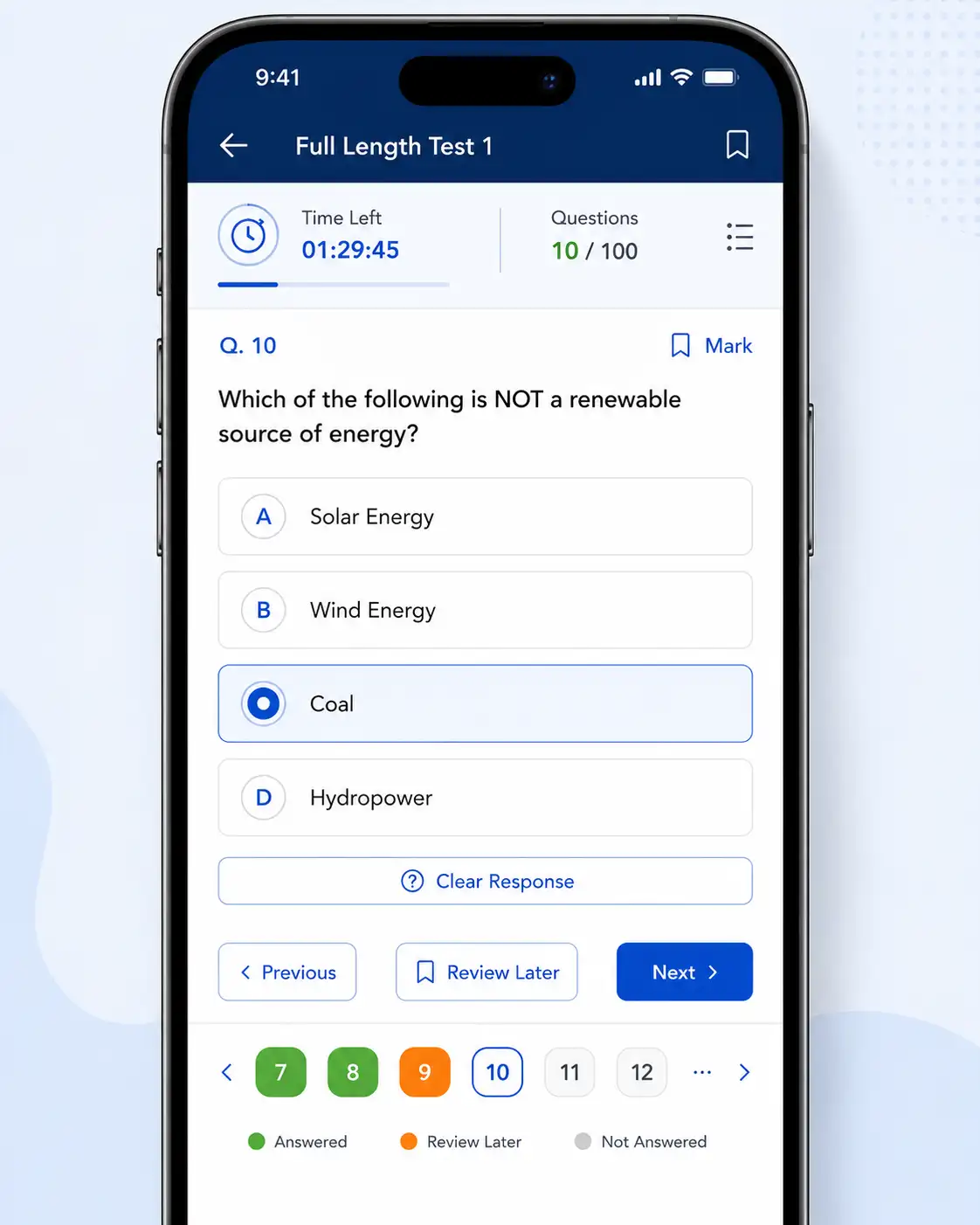
Mobile tests make practice accessible, but the device can also create distractions. Use full-screen mode where available, silence notifications and avoid switching between apps. Keep the phone charged and choose a stable connection. For long full-length tests, use a larger screen if possible to reduce reading fatigue, especially for passages, tables and diagram-based questions.
Before the first serious attempt, learn the interface. Check how to select and clear an option, mark a question for review, move between questions and submit the test. Interface confusion should not consume practice time.
Free Tests and Paid Test Series: How to Decide
Free and paid tests can support different needs. A free test allows you to sample question quality, practise a topic or begin preparation without cost. A paid series may offer a larger organised test library, detailed analysis, rank comparison, progress history or expanded solutions. The better choice depends on quality and relevance, not merely price.
Before purchasing, attempt available free tests. Check whether questions match the syllabus, whether the website works smoothly on your device and whether result explanations help you learn. Read what is included, how long access remains available and whether the series is updated when official patterns change.
Do not purchase multiple overlapping series without a plan to complete and analyse them. One relevant, well-used test series is more valuable than several unused subscriptions.
What Makes a High-Quality Teacher Exam Test Series?
- Syllabus relevance: Tests are mapped to the correct examination, paper and subject.
- Question accuracy: Questions, options and answer keys are checked before publication.
- Clear explanations: Solutions explain the principle rather than only displaying an option letter.
- Balanced difficulty: Tests include basic, moderate and challenging questions in a useful proportion.
- Exam-like interface: Timer, navigation and submission feel clear and realistic.
- Mobile responsiveness: Questions and options remain readable on smaller screens.
- Performance analysis: Candidates can see strengths, weaknesses and test history.
- Previous year integrity: Earlier questions are labelled accurately and not mixed with invented questions under a misleading title.
- Regular updates: Test categories are revised when an official syllabus or pattern changes.
- Transparent disclaimer: The platform does not falsely imply official affiliation.
How Teachers and Coaching Institutes Can Use Online Tests
Online tests are useful not only for individual learners. Teachers can assign a topic test after a class, use a mixed quiz for weekly revision and study aggregate errors before planning the next lesson. If many students choose the same incorrect option, the teacher can revisit the concept and explain why that distractor appeared convincing.
Coaching institutes can build a progression from foundation quizzes to exam simulations. Tests should be scheduled with enough time for discussion and correction. Publishing a leaderboard may motivate some learners, but personal improvement and accuracy should remain more important than rank alone.
How to Revise After a Low Mock Test Score
A low score is information, not a final judgment. Begin by checking whether the test matched your syllabus and preparation stage. Then review the error categories. If most mistakes come from untouched chapters, update the study plan. If they come from studied chapters, improve recall and revision. If the score fell because of time, practise sections with controlled limits.
Do not immediately attempt another full test to escape the disappointment. Repair the most important weaknesses first. A useful recovery cycle is: analyse today, revise tomorrow, practise targeted questions the next day and then attempt another comparable test.
How to Revise After a High Mock Test Score
A high score should be analysed with the same seriousness. Check how many answers were guesses, whether the test was easier than expected and whether weak sections were underrepresented. Study every mistake and protect the habits that produced the good result. Confidence should come from repeated evidence, not one favourable paper.
Exam-Day Lessons You Can Learn from Mock Tests
Mock tests help you decide practical matters before the real examination: the order in which you prefer to attempt sections, the time you can safely spend on a long question, how you respond when several questions feel difficult and how much review time you need. These decisions should be tested repeatedly rather than invented on examination day.
They can also train emotional control. A difficult opening question does not mean the entire paper is difficult. Skip, continue and collect available marks. If a section feels unfamiliar, return to your process: read carefully, eliminate where justified and protect time.
Frequently Asked Questions About Mock Tests, BPSC TRE, STET and CTET
1. What is a mock test?
A mock test is a practice examination designed to imitate important features of the real test, such as objective questions, time limits, navigation and result evaluation. It helps candidates measure preparation and improve strategy.
2. Where can I attempt an Online Free Test?
You can attempt a free test on an educational platform that provides exam-wise or subject-wise practice. Before starting, check the test title, syllabus relevance, question quality and result features.
3. Is an Online Free Test enough for complete preparation?
No single resource is enough for every candidate. Free tests are excellent for practice and diagnosis, but they should be combined with the official syllabus, reliable study material, revision and previous year papers.
4. What is a BPSC Previous Year Mock Test?
It is an earlier BPSC question paper presented as an interactive online test. It allows candidates to attempt the paper under timed conditions and analyse their answers afterward.
5. Why should I solve BPSC previous year questions?
They help you understand earlier question styles, identify important themes, test syllabus coverage and practise exam-level decision-making. They should guide preparation but should not be used to predict exact future questions.
6. How many BPSC Previous Year Mock Tests should I attempt?
Attempt as many relevant and verified papers as your schedule allows, but analyse each one thoroughly. Quality of review is more important than merely increasing the test count.
7. What is a TRE Test?
A TRE Test is practice material designed for a Teacher Recruitment Examination. For BPSC TRE, candidates should select tests according to the relevant recruitment notification, post, class level, subject and current syllabus.
8. How should I begin BPSC TRE mock test preparation?
Start with the latest syllabus and a diagnostic test. Complete topic-wise practice, move to subject tests, attempt previous year papers and then use full-length mocks for final preparation.
9. Are TRE Test questions the same in every recruitment cycle?
Candidates should not assume that they are. Syllabus, pattern or instructions can change. Always verify the latest official BPSC notification before relying on any mock test series.
10. What is a STET Mock Test?
A STET Mock Test is a practice examination for the relevant State Teacher Eligibility Test. It may include paper-wise, subject-wise, pedagogy and full-length practice according to the applicable official syllabus.
11. How can I improve my STET Mock Test score?
Analyse errors by topic, revise weak units, practise uncertain concepts and retake a comparable test. Track accuracy and repeated mistakes rather than focusing only on total marks.
12. What is a CTET Mock Test?
A CTET Mock Test is a practice paper designed around the relevant CTET paper and syllabus. It can help candidates practise child development, language, subject content, pedagogy and classroom-based questions.
13. How often should I attempt a CTET Mock Test?
In the foundation stage, focus on topic quizzes. As coverage improves, add subject tests and one full mock at suitable intervals. Increase full-test frequency near the examination while preserving time for analysis.
14. How can I improve pedagogy questions?
Study the principles of child development, inclusion, assessment and teaching-learning. During review, explain why the selected classroom approach supports learners better than the other options.
15. What does an English Mock Test include?
Depending on the examination, it may include grammar, vocabulary, comprehension, language usage and language pedagogy. Always match the topics with the official syllabus.
16. Can an English Mock Test improve reading speed?
Regular timed comprehension and language practice can improve reading efficiency, but accuracy should come first. Review why you misunderstood a passage or instruction.
17. Should I attempt mock tests on mobile or desktop?
Use the device that is available and comfortable. A responsive mobile test is convenient, while a larger screen may help with long passages, tables and diagrams. Remove notifications during serious attempts.
18. Should I guess answers in a mock test?
Your decision should reflect the marking rules of the target examination. In practice, label guessed answers so you can review them even when they are correct.
19. What should I do after submitting a mock test?
Review incorrect, guessed and unanswered questions. Identify error types, revise weak concepts, update your error notebook and schedule a targeted retest.
20. Why does my mock test score keep changing?
Scores can vary because of test difficulty, syllabus coverage, concentration, time strategy and question quality. Compare similar tests and look for trends across multiple attempts.
21. Can previous year papers predict the next examination?
They can reveal earlier patterns and important themes, but they cannot guarantee future questions. Use them as evidence for preparation, not as a promise of repetition.
22. Is a high mock test rank more important than accuracy?
Rank can provide comparison, but accuracy, syllabus coverage and repeated improvement are more useful for personal preparation. Rank also depends on who attempted the test and how difficult it was.
23. Should I reattempt the same mock test?
Yes, after revision and a suitable interval. Reattempting can verify whether mistakes were corrected, but avoid memorising option positions without understanding the concepts.
24. How do I know whether an online test is reliable?
Check whether it clearly identifies the exam and syllabus, uses well-written questions, provides validated answers, corrects reported errors and avoids misleading claims of official affiliation.
Start Your Free Online Mock Test Practice Today
The most effective test is the one you attempt honestly and analyse completely. Begin with an Online Free Test that matches your current goal. If English is weak, start with an English Mock Test. If you are targeting teacher recruitment in Bihar, use a syllabus-aligned TRE Test and a verified BPSC Previous Year Mock Test. If your goal is teacher eligibility, choose the correct STET Mock Test or CTET Mock Test for your paper and subject.
Do not wait for the entire syllabus to feel perfect. Use short tests to improve while studying, subject tests to protect retention and full-length tests to prepare for pressure. Record your mistakes, revise them and return stronger. Consistent testing, careful analysis and disciplined revision can make every study session more focused.
Important Examination Disclaimer
This article and the related mock tests are intended for educational practice. Examination schedules, eligibility rules, syllabus, paper structure, marks, duration, negative marking and other instructions may change. Candidates must verify all current details through the official notification and official website of the relevant examination authority. Unless expressly stated by an authorised body, an independent educational platform should not be understood as being affiliated with, endorsed by or representing BPSC, Bihar STET, CTET, CBSE, BSEB or any government authority.
